How Puzzle Games Enhance Cognitive Abilities
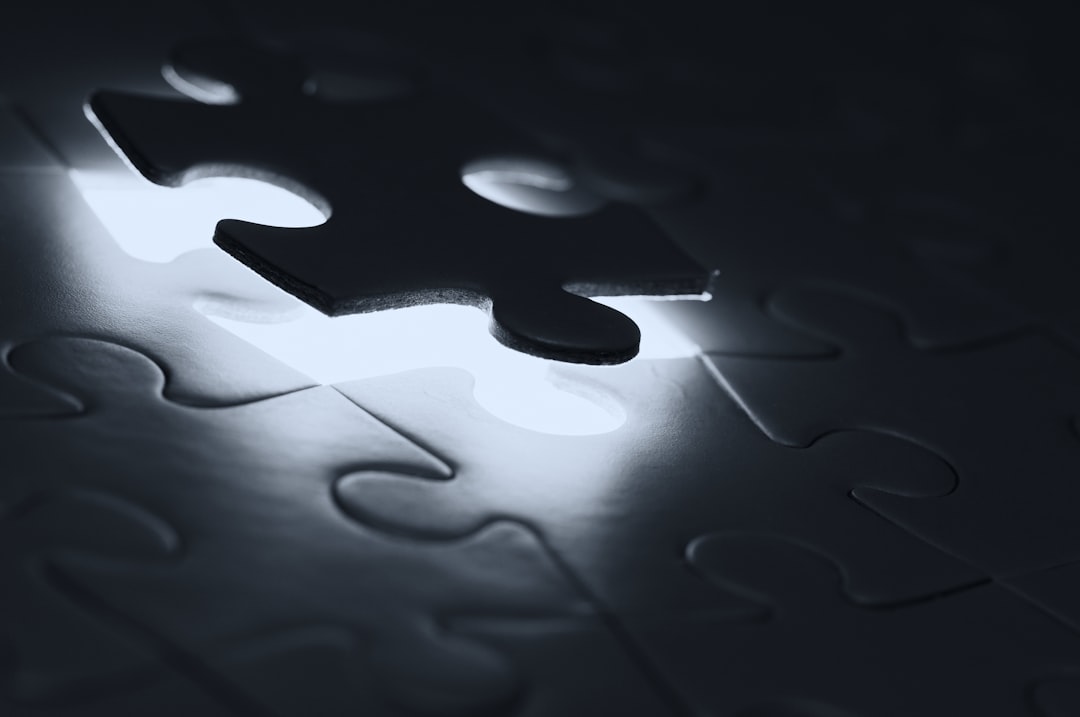
Puzzle games have entertained and challenged humanity for millennia, but only in recent decades have neuroscientists begun to uncover the profound impact these games have on our cognitive abilities. From ancient riddles to modern digital brain teasers, puzzles engage our minds in unique ways that can strengthen memory, enhance problem-solving skills, and even potentially protect against cognitive decline. This comprehensive exploration examines how different types of puzzle games target specific brain functions and provides practical guidance for leveraging puzzles to enhance your cognitive abilities.
The Neuroscience of Puzzle Solving
When you engage with a puzzle, your brain activates a complex network of regions working in concert. The prefrontal cortex, responsible for executive functions like planning and decision-making, plays a central role. The parietal lobes process spatial relationships, crucial for many visual puzzles. The temporal lobes activate for pattern recognition and memory retrieval. This widespread neural activation is one reason puzzles provide such comprehensive cognitive benefits.
Research using functional MRI scans has revealed that regular puzzle solving can increase gray matter density in multiple brain regions and strengthen connections between different neural networks. This neuroplasticity – the brain's ability to reorganize and form new neural connections – underlies the cognitive improvements that puzzle enthusiasts experience. Essentially, puzzles provide a workout for your brain, much as physical exercise strengthens your body.
Working Memory Enhancement Through Puzzles
Working memory, your ability to temporarily hold and manipulate information, is fundamental to countless cognitive tasks from following conversations to solving complex problems. Puzzles are exceptionally effective at training this crucial capability. When solving a sudoku puzzle, for example, you must keep track of multiple numbers and their potential placements simultaneously while testing hypotheses about correct solutions.
Studies have demonstrated that regular engagement with working memory-intensive puzzles can lead to measurable improvements in working memory capacity. This enhancement transfers beyond puzzle-solving to real-world applications like mental arithmetic, reading comprehension, and multitasking. The key is consistency – working memory improvements require regular challenge rather than occasional puzzle sessions.
Different puzzle types stress working memory in distinct ways. Number puzzles like sudoku emphasize numerical working memory, word puzzles engage verbal working memory, and spatial puzzles like Rubik's cubes challenge visual-spatial working memory. A varied puzzle diet ensures comprehensive working memory development across modalities.
Problem-Solving and Strategic Thinking
Perhaps the most direct cognitive benefit of puzzles is enhanced problem-solving ability. Puzzles present defined problems with optimal solutions, providing ideal training grounds for developing systematic problem-solving approaches. The strategies you develop for puzzle-solving – breaking complex problems into manageable components, testing hypotheses, learning from failures, and thinking multiple steps ahead – transfer remarkably well to real-world challenges.
Chess, often called the king of cognitive games, exemplifies how puzzles develop strategic thinking. Chess requires you to anticipate opponents' moves, evaluate multiple possible sequences of play, and make decisions under conditions of uncertainty. Regular chess players show enhanced abilities in these areas that extend beyond the game itself. Similar benefits emerge from other strategy-oriented puzzles like Go or complex logic puzzles.
The process of struggling with difficult puzzles builds cognitive resilience and persistence. Learning to approach seemingly impossible problems systematically, to tolerate frustration, and to persist despite setbacks are valuable meta-cognitive skills. These dispositions toward challenge often distinguish high-achieving individuals across domains.
Attention and Concentration Benefits
In our era of constant digital distraction, sustained attention has become increasingly rare yet increasingly valuable. Puzzles provide excellent training for focused attention and concentration. Successfully completing a complex puzzle requires maintaining attention on the task despite distractions, resisting impulses to give up when solutions aren't immediately apparent, and sustaining mental effort over extended periods.
Research shows that people who regularly engage with challenging puzzles demonstrate superior attention control compared to non-puzzlers. They're better at filtering out irrelevant information, maintaining focus on relevant stimuli, and shifting attention flexibly when appropriate. These attentional benefits prove valuable in countless situations from academic study to professional work requiring deep focus.
Different puzzle types train different aspects of attention. Fast-paced puzzles with time limits develop selective attention and rapid information processing. Complex puzzles requiring prolonged engagement build sustained attention. Puzzles with multiple elements or rules exercise divided attention and cognitive flexibility.
Visual-Spatial Reasoning Development
Visual-spatial reasoning – the ability to mentally manipulate objects and understand spatial relationships – is crucial for many fields from engineering and architecture to surgery and art. Many popular puzzles specifically target these abilities. Jigsaw puzzles require you to rotate pieces mentally and recognize how shapes fit together. Tangrams challenge you to arrange geometric shapes to match target configurations. Spatial reasoning puzzles in video games often involve navigating three-dimensional environments or manipulating objects in virtual space.
Studies consistently show that regular engagement with spatial puzzles enhances spatial reasoning abilities. These improvements appear relatively quickly – sometimes within just a few hours of training – and show good transfer to other spatial tasks. Interestingly, spatial reasoning is one cognitive domain where training effects often prove particularly robust and long-lasting.
The practical applications of enhanced spatial reasoning extend beyond obvious fields like architecture or engineering. Spatial abilities contribute to mathematical reasoning, scientific thinking, and even social cognition. Developing these skills through puzzles can thus yield surprisingly broad cognitive benefits.
Pattern Recognition and Cognitive Flexibility
Pattern recognition – identifying meaningful regularities in complex information – underlies much of human intelligence. Puzzles provide excellent training for this fundamental ability. Whether you're solving crossword puzzles by recognizing word patterns, completing visual sequences by identifying progression rules, or cracking codes by detecting statistical regularities, you're exercising pattern recognition skills.
Cognitive flexibility, the ability to shift between different concepts or perspectives, often goes hand-in-hand with pattern recognition in puzzle solving. Many puzzles have moments where you're stuck until you suddenly see the problem from a new angle – the famous "aha!" moment. This insight experience involves cognitive flexibility, and research suggests that people who regularly solve puzzles that require insight develop enhanced flexibility in their thinking more generally.
Pattern recognition and cognitive flexibility prove valuable far beyond puzzles. These abilities underlie creative problem-solving, scientific discovery, artistic innovation, and effective learning across domains. By challenging these cognitive capabilities regularly through varied puzzles, you're developing transferable thinking skills.
Processing Speed and Mental Agility
Processing speed – how quickly you can take in information, understand it, and respond – is a fundamental component of cognitive ability that influences performance across many tasks. Certain types of puzzles, particularly those with time constraints or requiring rapid decision-making, effectively train processing speed.
Fast-paced pattern matching games, timed mathematical puzzles, and reaction-based brain teasers all challenge you to think and respond quickly. With regular practice, improvements in puzzle-specific processing speed often transfer to faster mental processing more generally. This can translate to quicker reading comprehension, more rapid mental arithmetic, and generally more efficient thinking.
Mental agility – the ability to quickly switch between different tasks or mental sets – also improves with puzzle practice, particularly when engaging with varied puzzle types. People who regularly solve diverse puzzles show enhanced ability to rapidly adapt to new task demands, an increasingly valuable skill in our fast-changing world.
Memory Systems and Puzzle Games
Different types of puzzles engage and strengthen various memory systems in unique ways. Crossword puzzles tap semantic memory, your knowledge of words and facts. Memory matching games obviously target short-term visual memory. Sequential puzzles like remembering patterns or number sequences train working memory. Meanwhile, learning strategies for solving specific puzzle types builds procedural memory.
An interesting finding from memory research is that active engagement – like solving puzzles – produces stronger memory encoding than passive reception of information. When you actively work to solve a puzzle, you're engaging multiple memory systems simultaneously in ways that strengthen neural connections. This is one reason educational games and gamified learning can be so effective.
Regular puzzle solving may even help maintain memory function through aging. While the research is still developing, several studies suggest that people who engage regularly with cognitively stimulating activities including puzzles show slower rates of memory decline and lower risk of dementia. The cognitive reserve built through lifelong mental stimulation appears to provide some protection against age-related cognitive changes.
Matching Puzzles to Cognitive Goals
Different puzzles target different cognitive abilities, allowing you to customize your puzzle practice based on specific cognitive goals. If you want to improve working memory, puzzles like sudoku, mental arithmetic challenges, or sequence memory games are ideal. For enhancing spatial reasoning, try jigsaw puzzles, tangrams, or spatial navigation games. To develop strategic thinking and planning, chess, strategy games, or complex multi-step puzzles are excellent choices.
For comprehensive cognitive development, variety is key. Engaging with diverse puzzle types ensures you're exercising multiple cognitive domains rather than becoming narrowly expert at a single puzzle type. Think of it like cross-training for your brain – just as athletes train different muscle groups and energy systems, cognitive fitness benefits from working different mental capabilities.
Consider your current cognitive strengths and weaknesses when selecting puzzles. If you struggle with attention and focus, start with engaging puzzles that match your current ability level – challenging enough to hold attention but not so difficult as to be frustrating. As your attention strengthens, gradually increase challenge levels. This progressive overload principle applies to cognitive training just as it does to physical training.
Maximizing Cognitive Benefits from Puzzles
Simply doing puzzles provides cognitive benefits, but you can maximize these benefits through strategic approaches. First, embrace appropriate challenge levels. Puzzles should be difficult enough to require genuine mental effort but not so hard as to be discouraging. This "zone of proximal development" maximizes learning and cognitive growth.
Regular practice matters more than marathon sessions. Consistent daily puzzle engagement, even for just 15-30 minutes, produces better cognitive benefits than occasional long puzzle sessions. This consistency allows for ongoing neural adaptation and skill development. Consider establishing a daily puzzle routine, perhaps as part of your morning or evening ritual.
Reflect on your puzzle-solving process. After completing challenging puzzles, take a moment to think about strategies that worked well, mistakes you made, and what you learned. This metacognitive reflection enhances learning and helps you transfer puzzle-solving insights to other cognitive domains. You're not just training specific skills but developing a more sophisticated approach to problems generally.
Social and Emotional Dimensions
While often considered solitary activities, puzzles can provide valuable social cognitive benefits when approached collaboratively. Solving puzzles with others requires communication, perspective-taking, and coordinated problem-solving – all valuable social cognitive skills. Family puzzle time or puzzle clubs provide both cognitive stimulation and social connection, combining benefits in powerful ways.
The emotional experience of puzzle solving also matters for cognitive benefits. The satisfaction of solving a challenging puzzle releases dopamine, reinforcing the behavior and enhancing motivation for future cognitive challenges. This positive emotional association with mental effort can build a generally more positive attitude toward cognitive challenges, increasing likelihood of engaging with difficult problems rather than avoiding them.
Puzzles can also provide valuable stress relief and mindfulness benefits. The focused attention required for puzzle solving creates a flow state where worries and anxieties fade into the background. This meditative quality of puzzle engagement can reduce stress while simultaneously providing cognitive stimulation – a valuable combination for overall brain health.
Conclusion
Puzzle games offer a remarkably effective and enjoyable path to cognitive enhancement. By engaging multiple brain systems simultaneously, challenging various cognitive abilities, and promoting neuroplasticity, puzzles provide comprehensive mental workouts with benefits extending far beyond the puzzles themselves. From enhanced working memory and improved problem-solving to better attention control and increased processing speed, the cognitive gains from regular puzzle engagement are substantial and scientifically documented. The key is approaching puzzles strategically – choosing appropriate challenge levels, engaging with diverse puzzle types, practicing consistently, and remaining mindful of both your puzzle-solving processes and how they connect to broader cognitive goals. Whether you're solving crosswords over morning coffee, engaging with mobile brain training apps during commutes, or dedicating evenings to complex strategy games, you're investing in your cognitive health and building mental capacities that serve you in countless life domains. The beautiful convergence of fun and cognitive benefit makes puzzles uniquely valuable tools for maintaining and enhancing mental fitness throughout life.